Set the temperature
Fill a heat-safe container with water, attach your immersion circulator, and set the temperature appropriate for your food.
Imagine cooking steak, chicken or fish in water held at a carefully controlled temperature. That's the idea behind sous vide—and it's easier than it sounds.
See the four steps ↓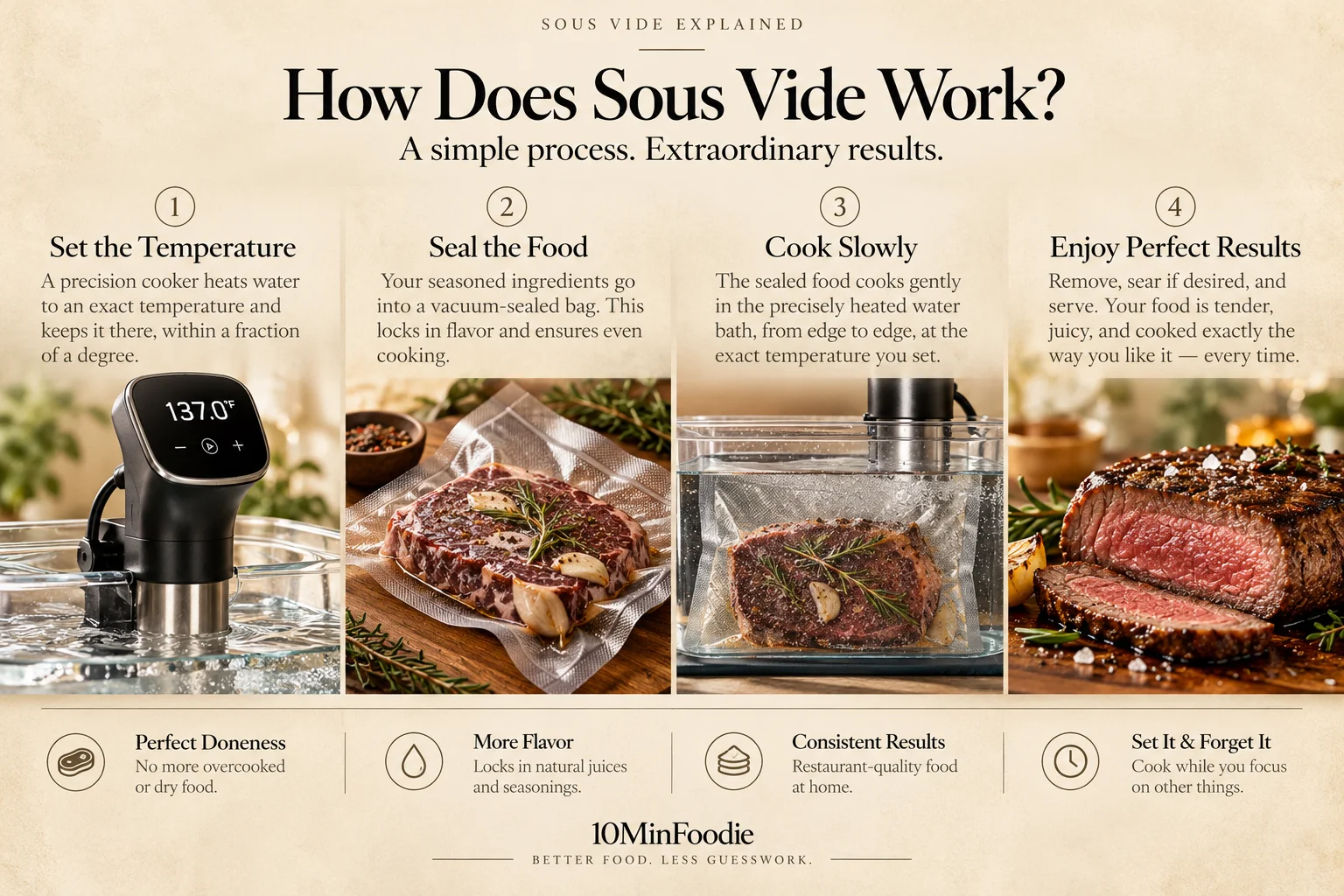
Cooking times and temperatures vary by ingredient and thickness. Follow a reliable recipe and appropriate food-safety guidance.
Sous vide (pronounced soo veed) means “under vacuum” in French. In home cooking, it usually means placing bagged food in a temperature-controlled water bath. The circulator keeps the water at your chosen setting, so the food heats predictably.
Fill a heat-safe container with water, attach your immersion circulator, and set the temperature appropriate for your food.
Season your ingredients and seal them in a suitable food-safe bag. A vacuum sealer makes this convenient; water-displacement bags can also work for many recipes.
Submerge the bag and cook for the recommended time. The circulating water transfers heat gently and evenly. For meat and poultry, use validated time-and-temperature guidance for safety.
Remove the food, pat it dry, then sear or roast briefly when you want a golden crust. The water bath controls the interior; finishing adds color and flavor.
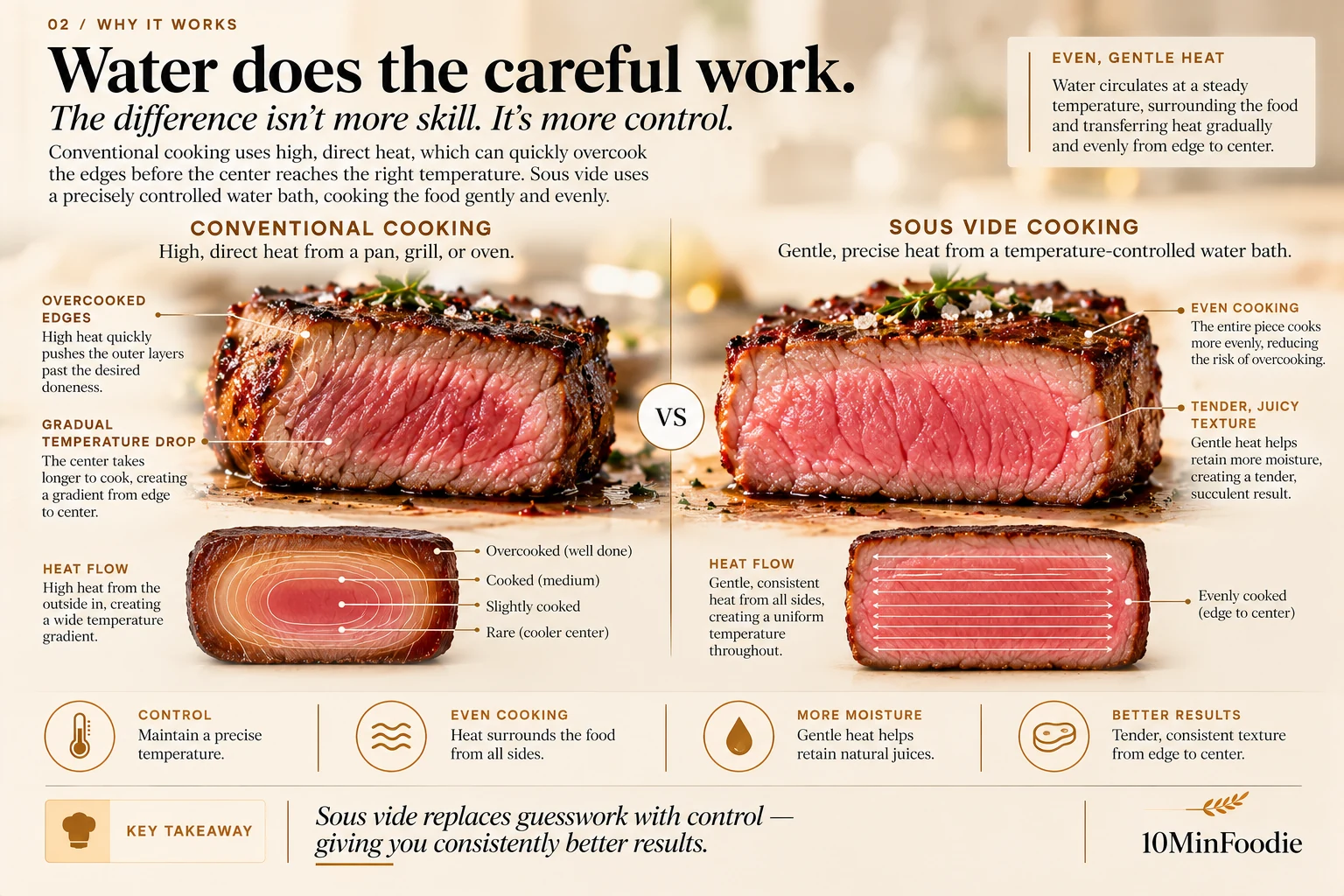
In a hot pan or oven, the outside of food can become much hotter than the center. A sous-vide bath is different: its water is held near your target cooking temperature, which gives you more control over doneness and reduces the risk of overshooting it.
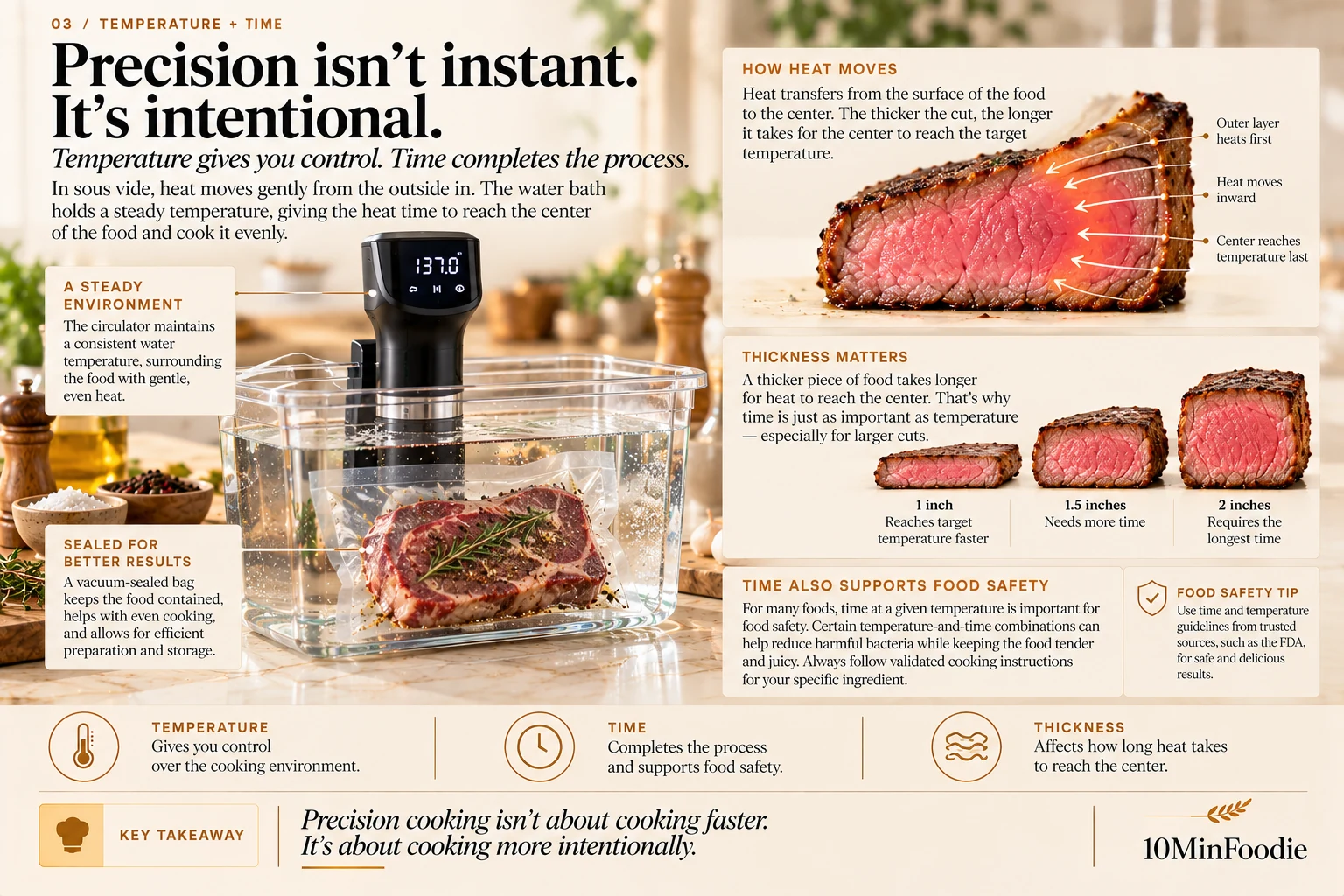
Time still matters. A thick steak needs time to heat through; some foods need additional holding time for pasteurization. Sous vide is precise—not instant, and not automatically safe at every setting.
Gentle, circulating water helps reduce temperature overshoot and makes cooking more predictable.
Temperature and time work together; thickness and food-safety requirements matter too.
Not always. A vacuum sealer makes portioning, sealing and storage convenient. For many home recipes, a suitable zip-top bag using the water-displacement method can work too.
No. The water bath cooks the interior gently. A quick finish in a hot pan, under a broiler or on a grill creates the browned surface many people love.
It can be when you follow food-specific, validated temperature-and-time instructions, use food-safe bags, and handle and chill food properly. Low temperatures without adequate time can be unsafe, especially for poultry and other higher-risk foods.
Start with a reliable steak or chicken recipe that specifies thickness, bath temperature, total time and finishing method. Then explore our chicken, short ribs, lobster, and fish lessons.
The fundamentals are simple, even if each ingredient requires its own cooking guidance.
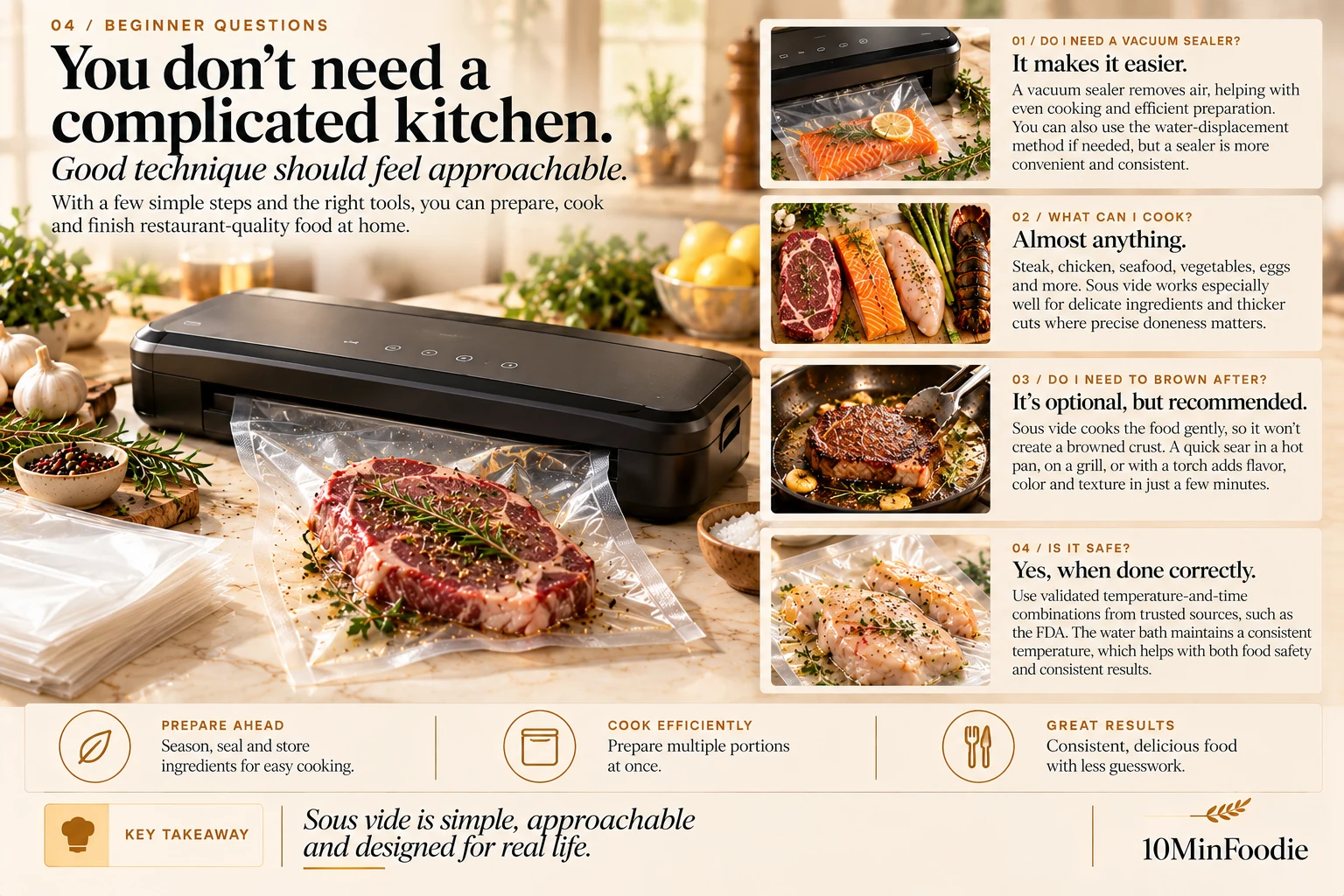
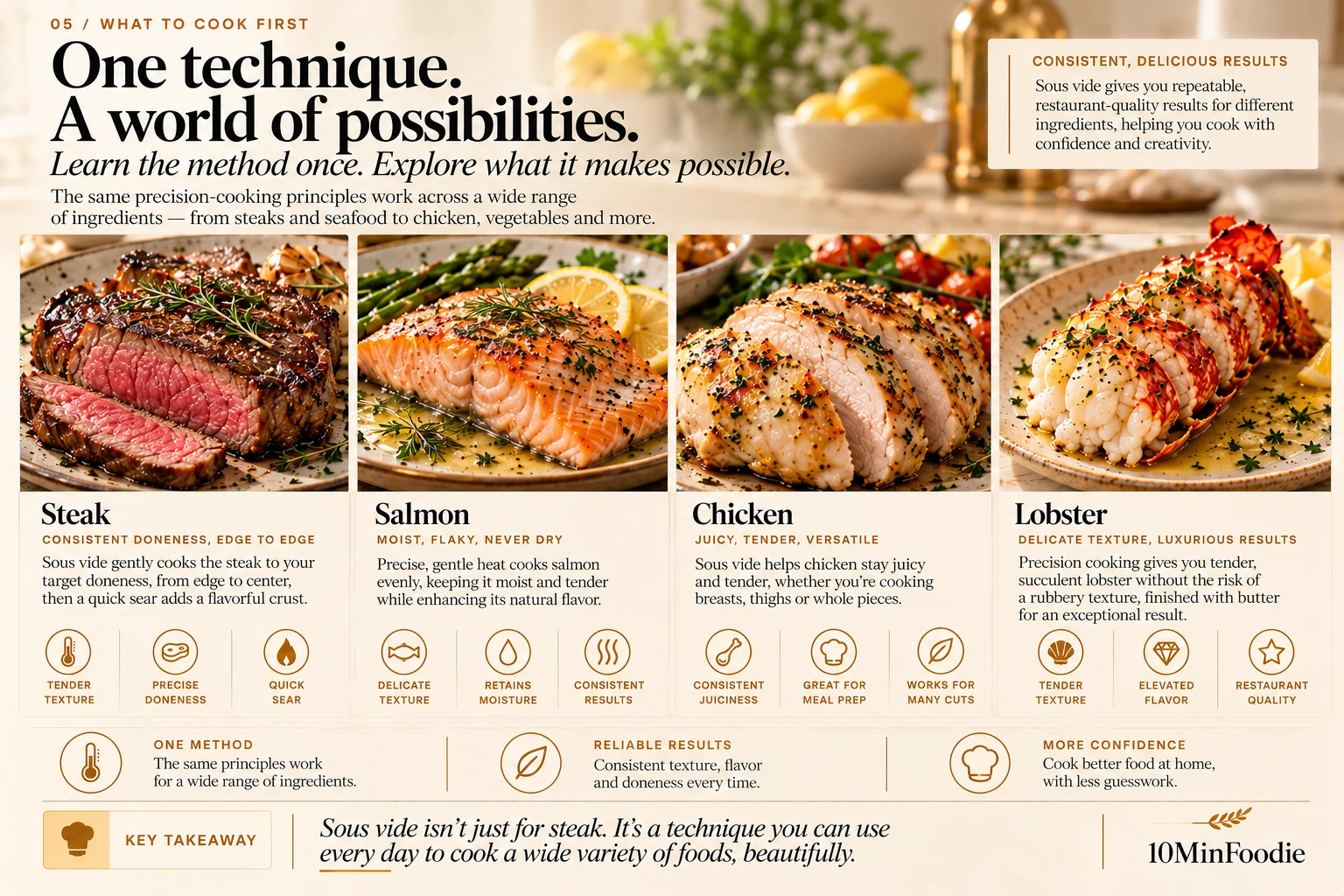
From steak to seafood, the method can be adapted to a range of ingredients.
The tools help you prepare, seal, and cook with greater control.
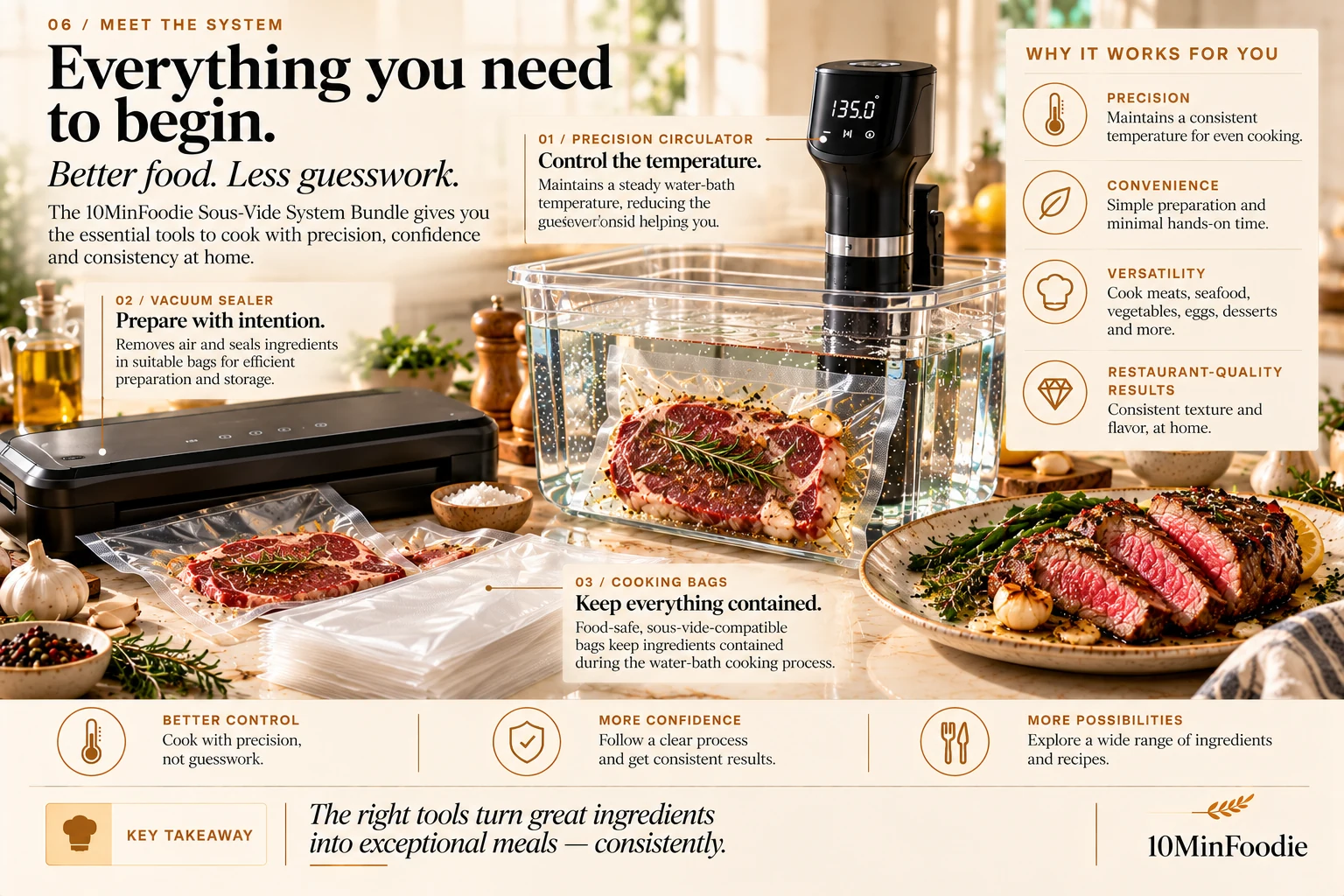
Our $249 introductory Precision Cooking System brings together a sous-vide circulator, vacuum sealer and bags so you can start with the essential equipment in one place.
Explore the $249 System →Not ready? Start with the free Field Guide.