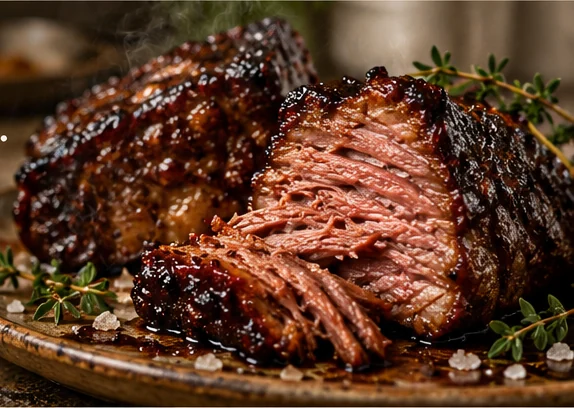
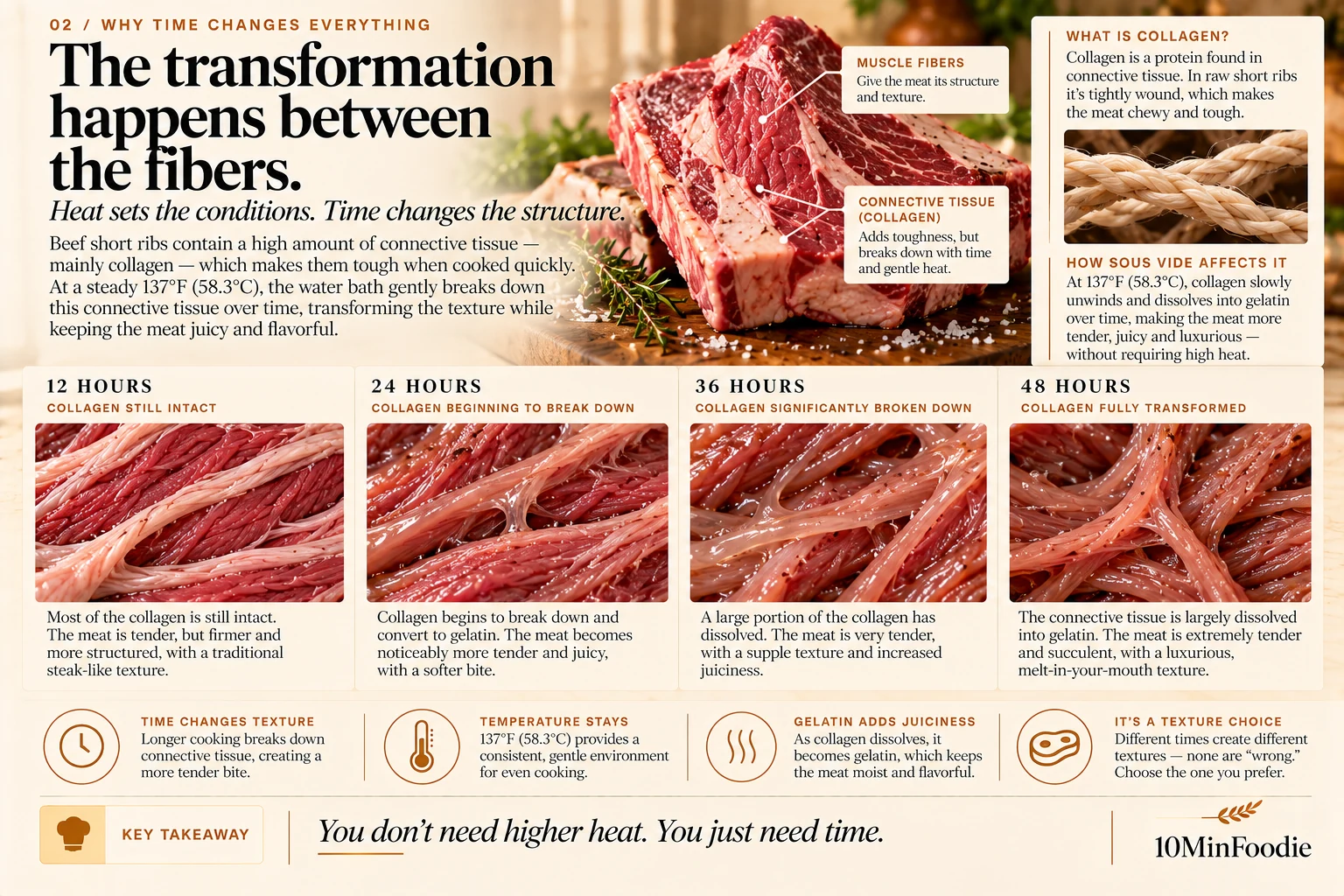
One temperature. Four textures.
Time doesn't simply make the meat “more cooked.” At a controlled temperature, it changes how far tenderizing processes can progress while the cooking environment stays consistent.
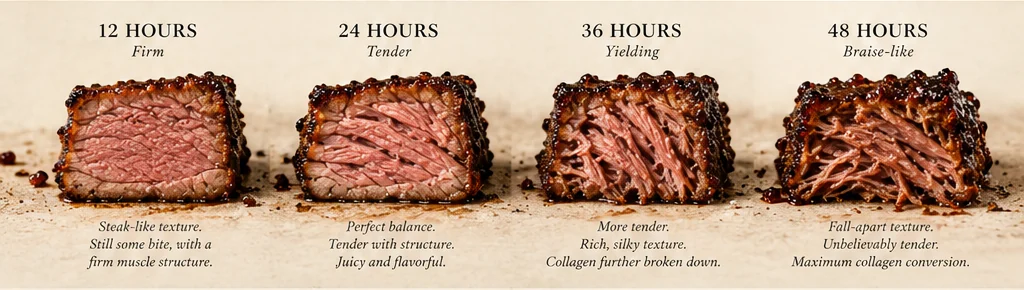
One temperature. Four possible textures.
The same cut can become progressively more yielding with longer cooking. These are illustrative outcomes, not guaranteed results.
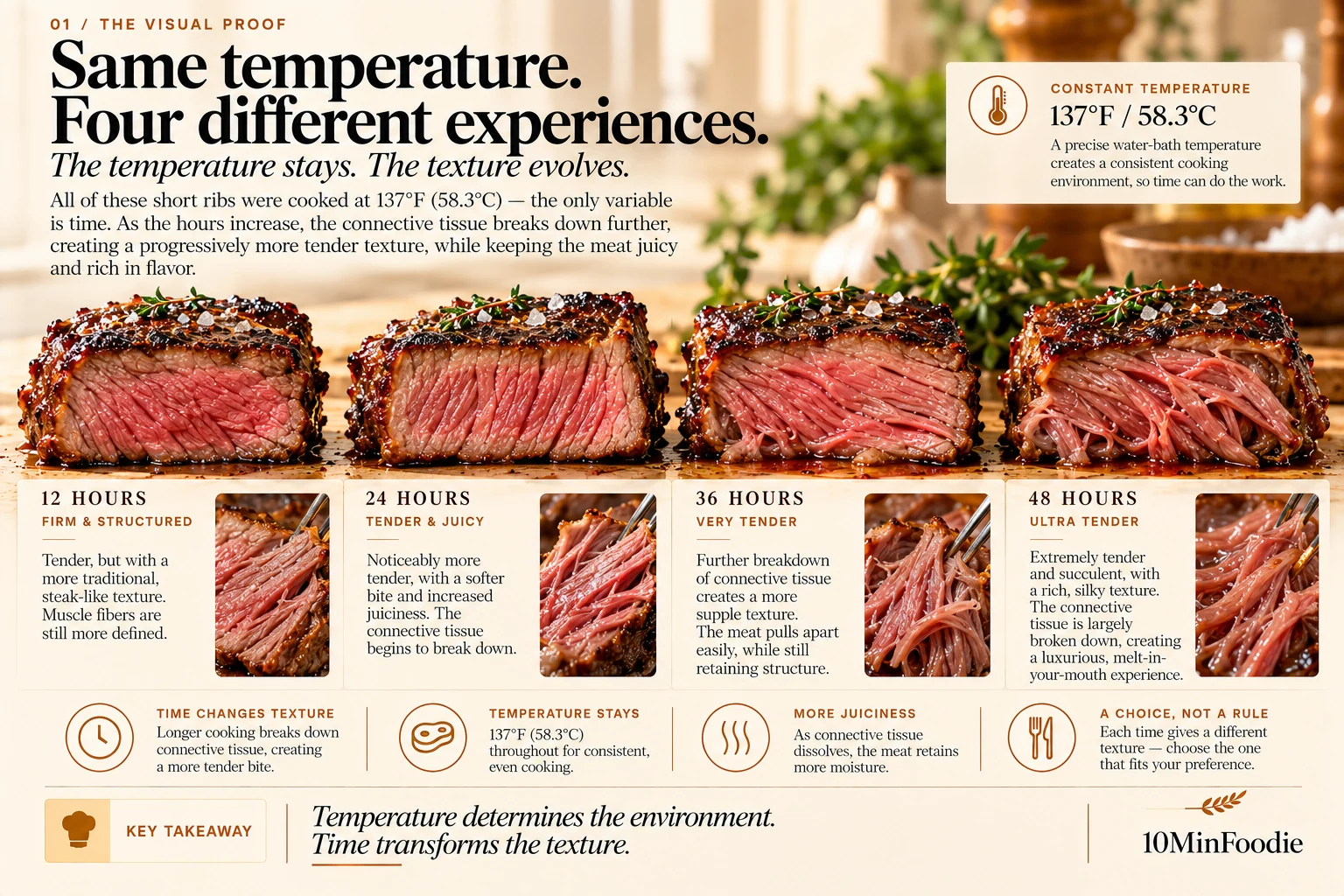
Temperature and time do different jobs.
Temperature strongly influences how proteins behave and the doneness range you hold the food in. Time determines how long connective tissue is exposed to that environment.
Sets the thermal environment. At 137°F, the bath holds the short rib in a narrow temperature range rather than continually getting hotter.
Changes how long the meat spends there. Over many hours, connective tissue can soften and texture can move from steak-like toward braise-like.
Texture is a continuum, not a single “correct” endpoint. Choose the result you actually want.
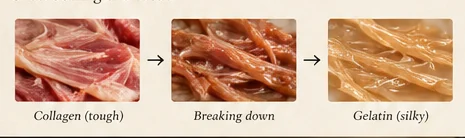
Time changes connective tissue.
Short ribs contain substantial collagen-rich connective tissue. Extended controlled cooking can soften it while the water bath holds a consistent temperature.
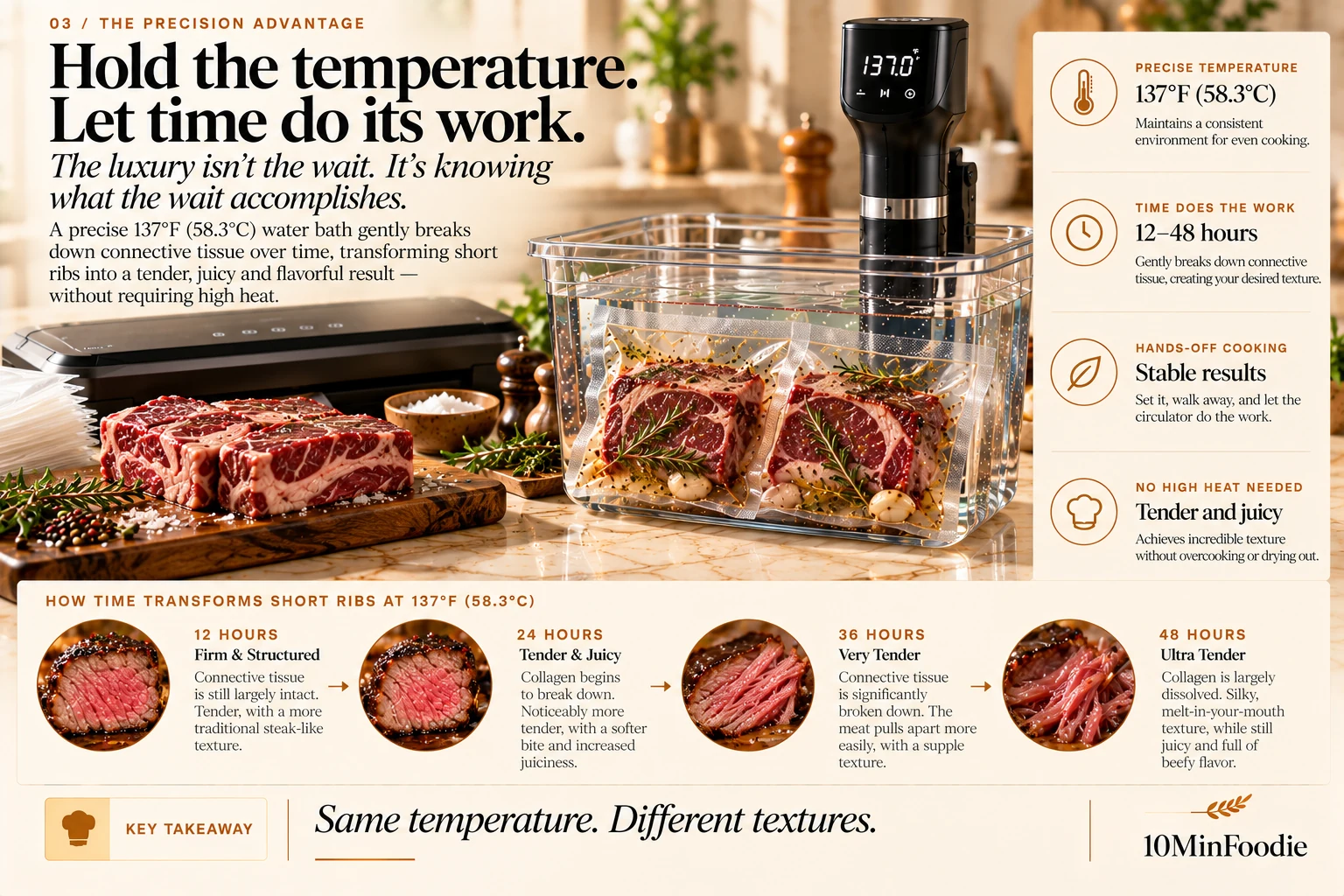
A water bath makes a narrow temperature easier to hold.
A conventional oven can absolutely cook excellent short ribs. Sous vide is useful when you specifically want to hold the food at a tightly controlled low temperature for a long time, then finish the exterior separately with high heat.
That separation is the idea: gentle, controlled heat for the interior; aggressive finishing heat for browning and character.
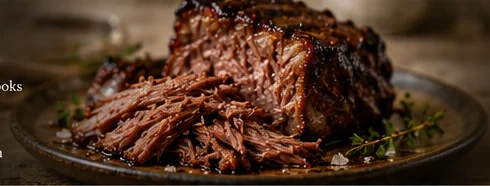
Control the heat. Choose the time.
A water bath helps maintain the chosen cooking environment during a long cook.
Short rib is the demonstration. The principle travels.
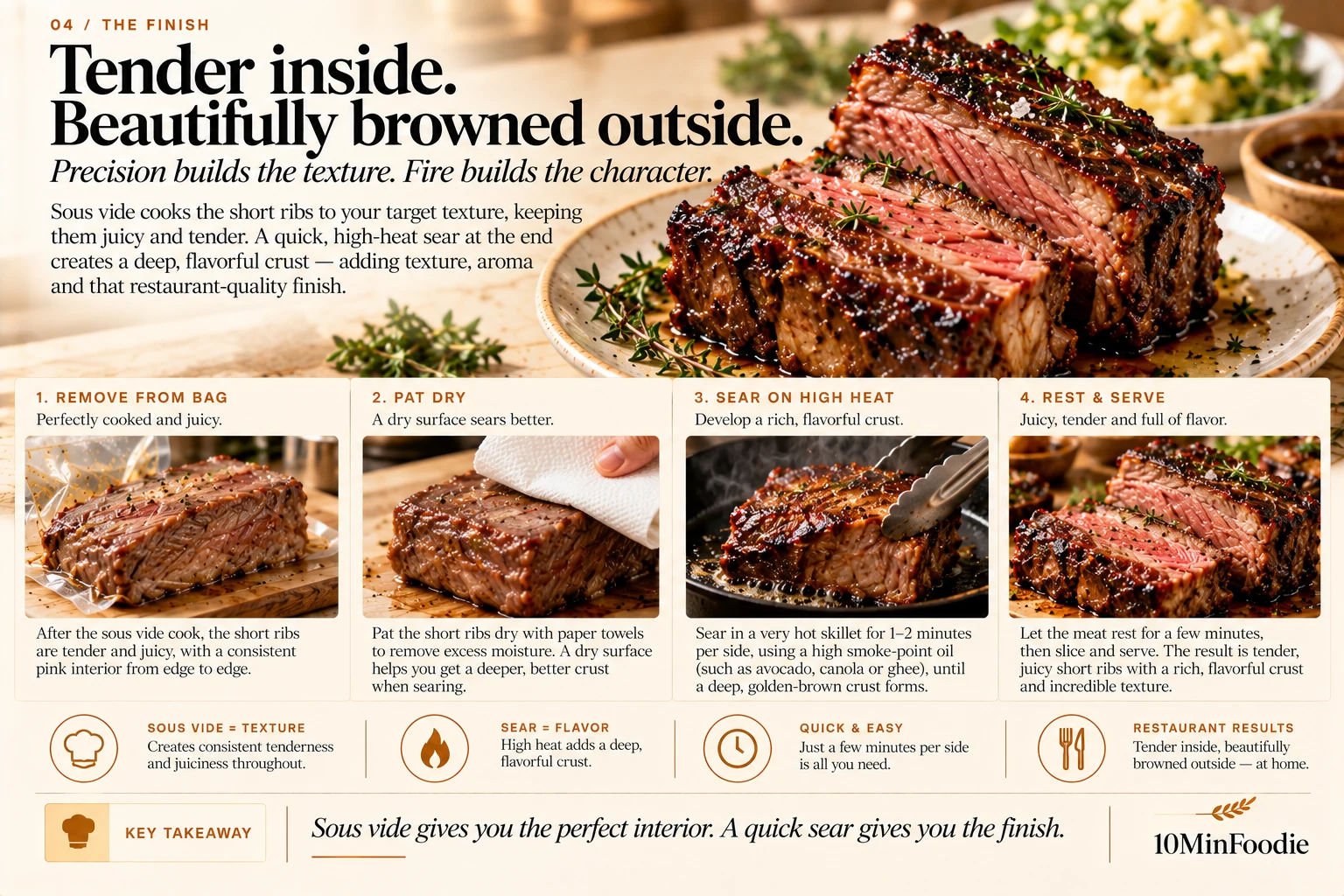
Build the crust at the end.
Dry the surface thoroughly and finish with a brief, hot sear for flavor and color.
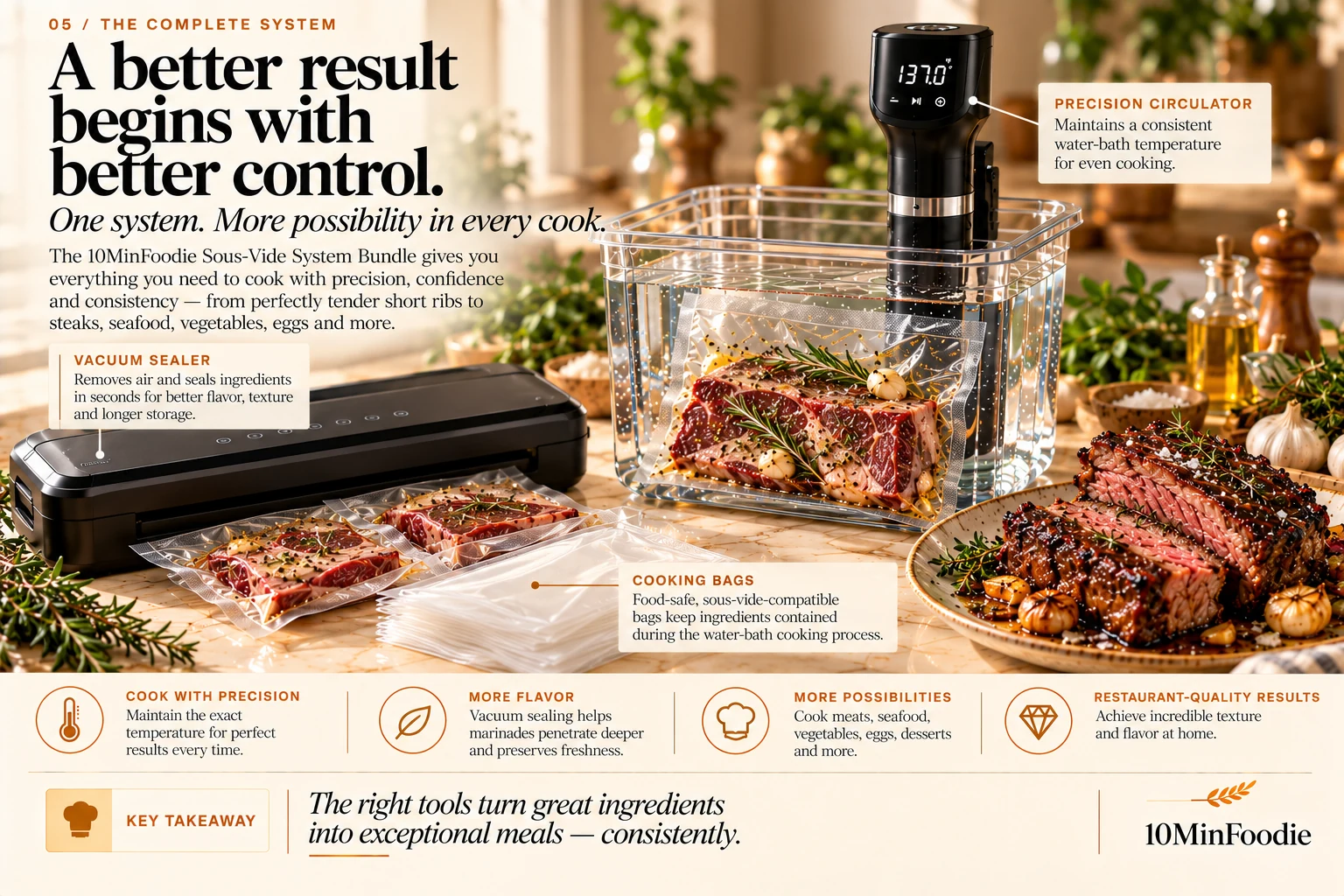
The 10MinFoodie Sous-Vide System.
Everything you need to start cooking with precision at home — without assembling the setup piece by piece.
- Precision circulator
- Vacuum sealer
- Vacuum bags
- Starter guidance & temperature charts
Explore the complete cooking system and current offer.
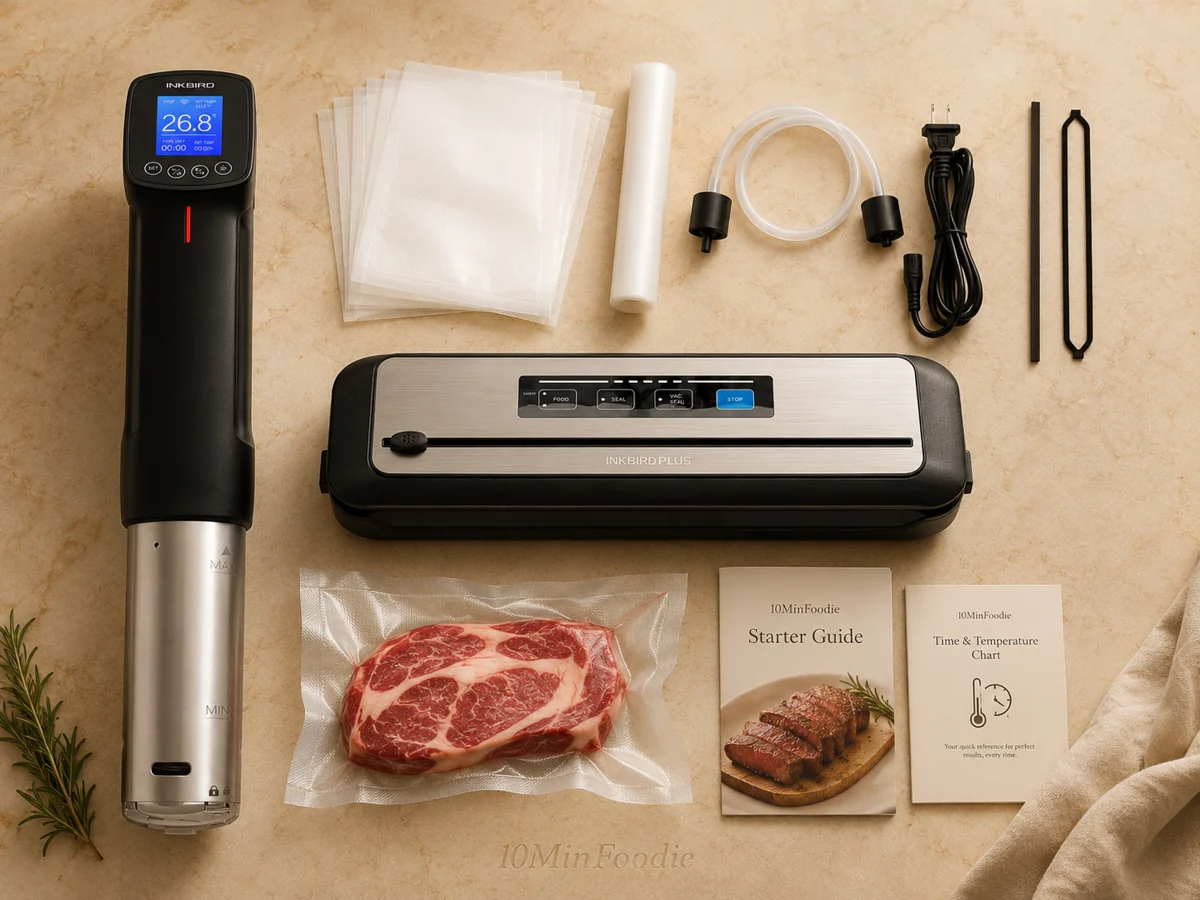
The equipment behind the method.
A circulator, sealer, and suitable bags help make this technique accessible at home.
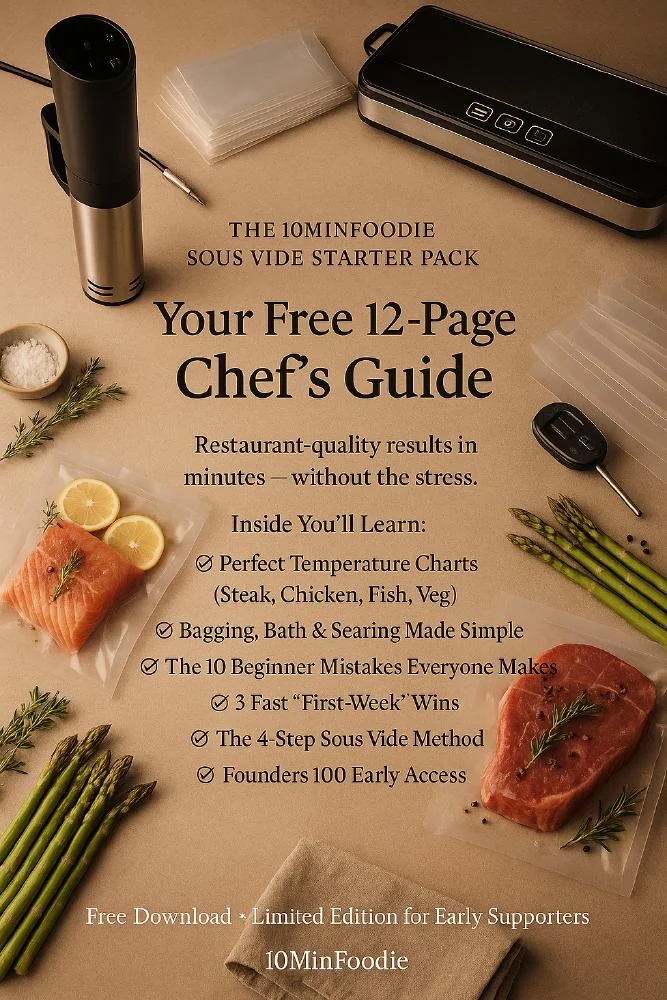
Take the temperatures with you.
Get the free 10MinFoodie Chef's Guide with temperature charts, beginner technique, common mistakes and a simple first-week workflow.
Free cooking guide.
Before you start.
A few useful distinctions about long sous-vide cooks.
Is 48 hours always better than 24?
No. Longer isn't automatically better. The point is texture choice. Some cooks prefer a firmer, steak-like short rib; others want a softer, braise-like result.
Why sear after sous vide?
The water bath handles the interior gently. A brief high-heat finish builds browning, aroma and crust without requiring the center to spend long over intense heat.
Can I use the same idea with other foods?
Yes, but every food responds differently. Temperature, time, thickness and food-safety requirements all matter. Use food-specific guidance rather than copying a short-rib schedule onto another ingredient.
Where do I get the complete setup?
The 10MinFoodie Sous-Vide System is linked above and on the main shop page, with the current bundle details and checkout options.