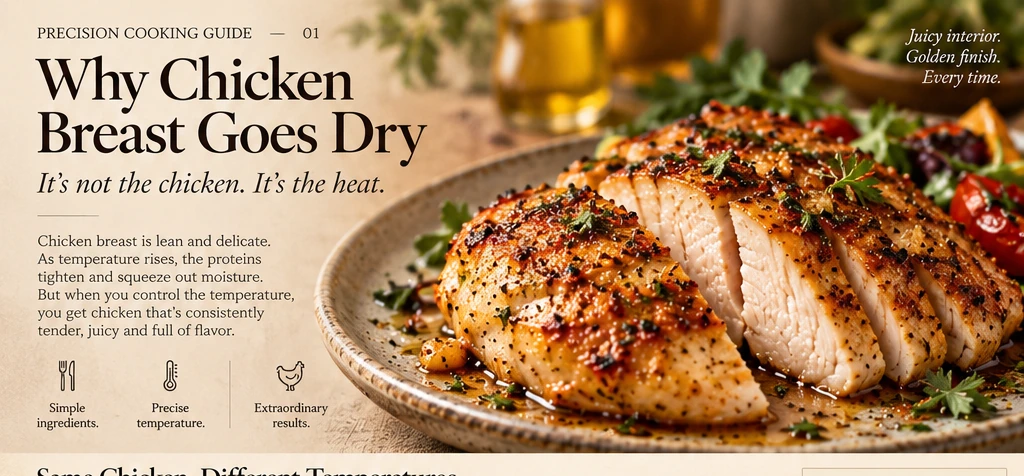
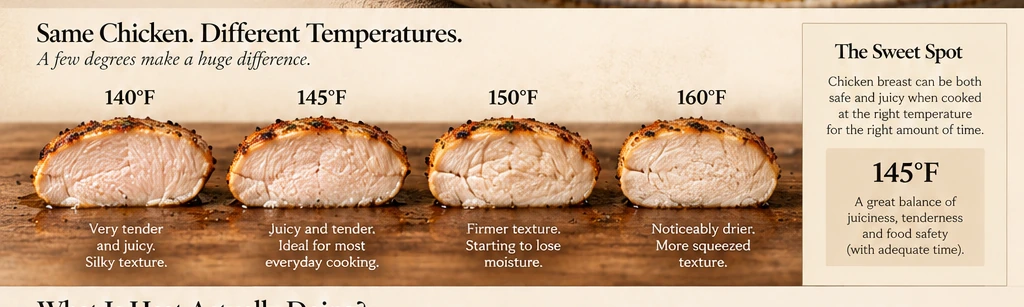
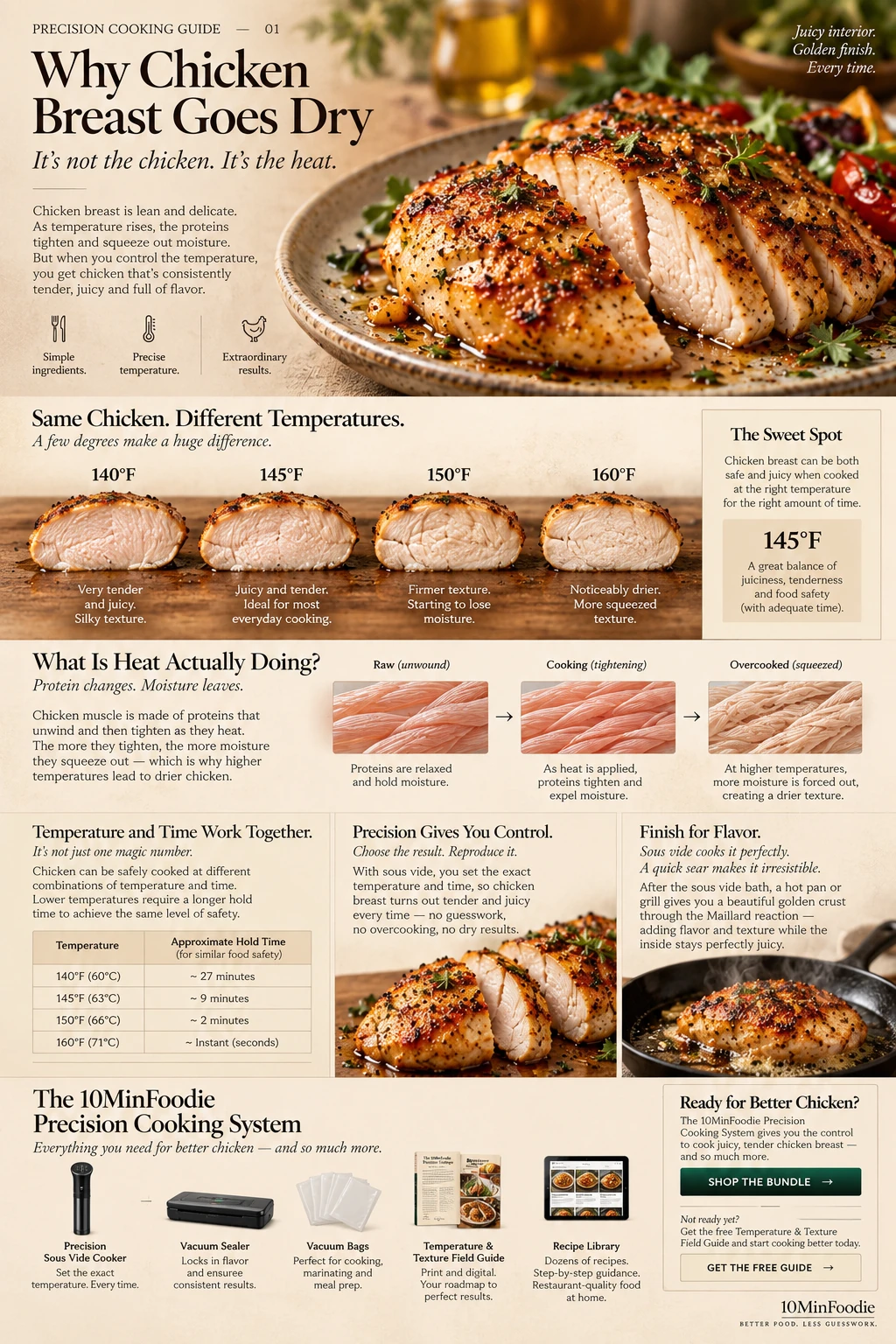
Same chicken. Different temperatures.
The center temperature is not a footnote. It is one of the main variables determining how chicken breast feels when you eat it.
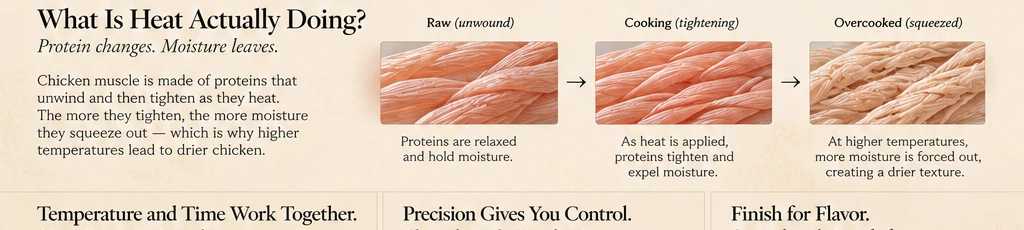
As proteins tighten, moisture gets pushed out.
Chicken breast contains very little fat to hide overcooking. As its proteins change with heat, the structure becomes firmer and water-holding capacity changes. Push the temperature higher and the eating experience becomes progressively tighter and drier.
Changes protein structure and texture. Higher is not automatically better.
Lets you stop cooking in the texture range you actually want instead of chasing doneness by guesswork.
The useful lesson is culinary, not microscopic: small temperature changes can create very noticeable texture changes.
There isn’t one magic number.
The familiar 165°F recommendation is a simple instant-read safety endpoint. Precision cooking can use lower temperatures only when the food is held long enough to achieve an equivalent pasteurization target — and the required total cook depends on factors including thickness and starting temperature.
Precision gives you a window instead of a guess.
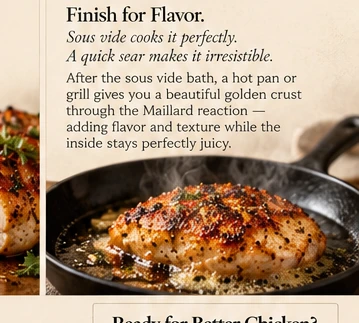
A controlled water bath separates the job of cooking the interior from the job of browning the exterior. First, bring the chicken gently to the texture you want. Then dry the surface and finish it quickly with high heat.
Gentle heat for the center. Aggressive heat for the surface. Two different jobs, handled separately.
Once you understand the variables, repeatability becomes the point.
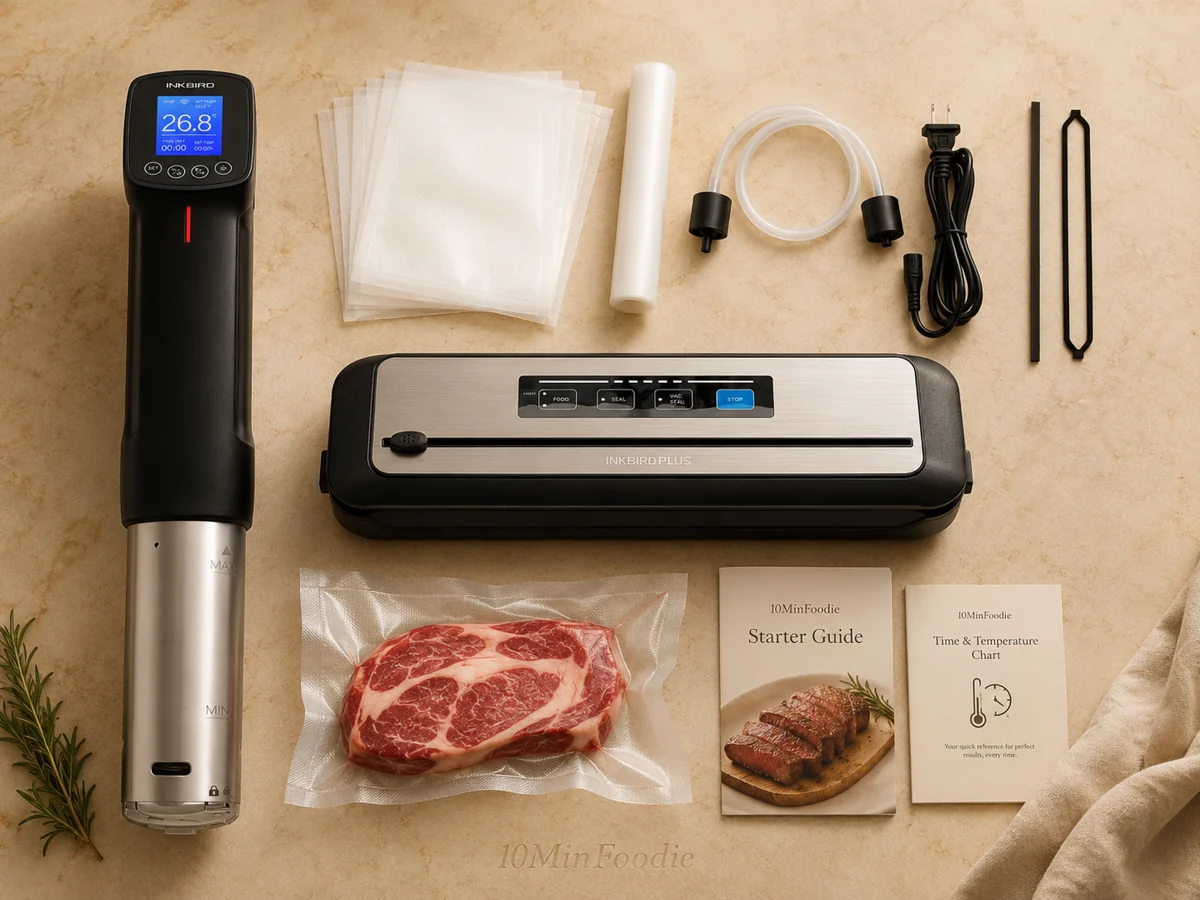
The 10MinFoodie Precision Cooking System.
The tools and guidance for turning temperature control into an everyday cooking habit — without assembling the setup piece by piece.
- Precision sous-vide cooker
- Vacuum sealer
- Vacuum bags
- Temperature & Texture Field Guide
- Recipe library and finishing guidance
Explore the complete cooking system and current offer.
Temperature & Texture Field Guide
A practical reference for choosing the result before you start cooking.
Juiciness
Doneness
Texture
Transformation
Take the temperatures with you.
Get the free 10MinFoodie field guide with practical temperature ranges, texture cues, common mistakes and the principles behind precision cooking.
Free cooking guide.
The whole idea, on one page.
Built to be useful even if you never buy anything. Save it, pin it, come back when chicken is on the menu.
Before you cook.
The distinctions that matter most.
Is 145°F chicken safe?
It can be when the center of the food is held at the required temperature long enough to achieve the needed pathogen reduction. That is different from simply touching 145°F. Sous-vide safety depends on the full time-and-temperature process, including how long the center takes to heat through.
Why not just cook everything to 165°F?
165°F is a simple instant-read safety endpoint and is easy to communicate. Precision cooking allows other validated time-and-temperature combinations, which can produce different textures.
Why sear after the water bath?
The water bath handles the interior gently. Drying and briefly searing afterward creates browning, aroma and crust without requiring the center to spend long over intense heat.
Do I need a vacuum sealer?
A vacuum sealer makes portioning and consistent bag contact convenient, especially when meal prepping. The complete 10MinFoodie system is designed to put the core setup in one place.